

In recent years, the Video Assistant Referee (VAR) has been one of the most controversial additions to modern football. While it was introduced to eliminate clear and obvious errors, many fans and pundits argue that it has stripped the game of its raw emotion and spontaneity. The FA Cup, particularly in its earlier rounds, has become a living laboratory to test this theory. When lower-league teams clash with Premier League giants, and the cameras are fewer, the game feels freer, faster, and more authentic. Marvelbet has observed that this competition often reminds us why we fell in love with football in the first place: the beautiful unpredictability of the game sans constant interruptions.
The Raw Emotion of Cup Football
There’s something magical about the FA Cup. It’s a tournament where a part-time player from a non-league club can score a winner against a top-flight defense. In these moments, the roar of the crowd is untainted by the anxiety of a potential offside check. Without VAR, the goal stands, and the celebration is immediate. This purity of emotion is something that the Premier League, with its clinical reviews, often lacks.
As former player and current pundit Gary Lineker once noted on his podcast, “The best bits of the FA Cup are the giant killings, and those moments are killed by VAR.” When a goal is scored, everyone in the stadium knows instantly whether to cheer or groan. There is no awkward pause, no waiting for a decision from Stockley Park. It’s just pure, unadulterated football.
Why Lower Leagues Thrive Without Technology
The earlier rounds of the FA Cup feature clubs from the National League and below. These teams operate on shoestring budgets, often without goal-line technology or even multiple camera angles. For them, VAR is a luxury they cannot afford, and frankly, a burden they do not need. The game relies on the integrity of the referee and the linesmen.
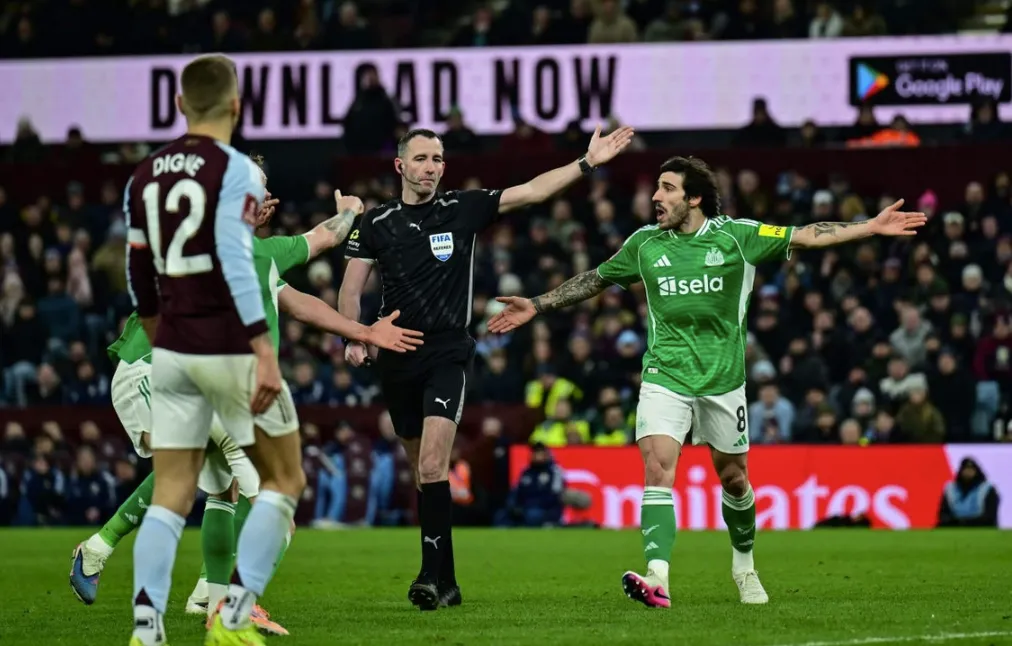
This self-reliance creates a fascinating dynamic. Referees are empowered to make split-second decisions, and players accept them more readily than in top-flight matches. There is a sense of trust in the officials, a departure from the constant scrutiny seen in elite football. According to a study by the International Football Association Board (IFAB), the flow of the game in matches without VAR is significantly faster, with fewer stoppages averaging 23 seconds per review.
The Case for a VAR-Free Future
While VAR has its merits in correcting offside calls and missed red cards, the FA Cup has shown that soccer is better without it, at least in certain contexts. The beauty of the game lies in its mistakes and human error. A striker celebrating a goal that was a millimeter offside adds to the narrative of sport.
Expert analyst Mark Thompson of Evening Standard recently put it, “The FA Cup is a reminder that football existed for over a century without technology, and it was arguably more exciting. The drama of a wrong call is part of the sport’s history.”

However, the argument is not to abolish VAR entirely from the sport but to use it sparingly. The current system, where every goal is checked for high-tech marginal offsides, is exhausting for fans. The FA Cup offers a glimpse of what football could be: a game decided by players, not pixels.
The Role of Technology in Modern Football
It’s important to acknowledge that technology has its place. Goal-line technology, for instance, is swift, accurate, and non-intrusive. It confirms a goal within a second without stopping play. The problem lies with VAR’s lengthy reviews, which kill the momentum of an attack and the excitement of a goal.
A survey conducted by Sky Sports found that 67% of fans believe VAR reduces the excitement of scoring. In the FA Cup, you don’t have that problem. You have pitches that are sometimes waterlogged, walls that break early, and shots that fly in from 30 yards. It’s chaotic, romantic, and brilliant.
Conclusion
Marvelbet believes that the FA Cup serves as a perfect case study for football purists. It demonstrates that while VAR can be useful in preventing howlers, its implementation often detracts from the game’s core essence. The spectacle of a lower-league defender marking a Premier League star without the fear of a delayed offside call is what makes the Cup special.
Soccer is better without VAR because it allows for mistakes, drama, and instant emotion. The FA Cup has shown us that the human element of refereeing and the raw passion of the fans are irreplaceable. So, the next time you watch a cup match, pay attention to the pace and the freedom. You might just be watching the future of football, or perhaps, a beautiful glimpse into its past.
What has been your most memorable FA Cup moment? Share your thoughts in the comments below and explore more analysis on football with us to stay updated on the game we love.
