
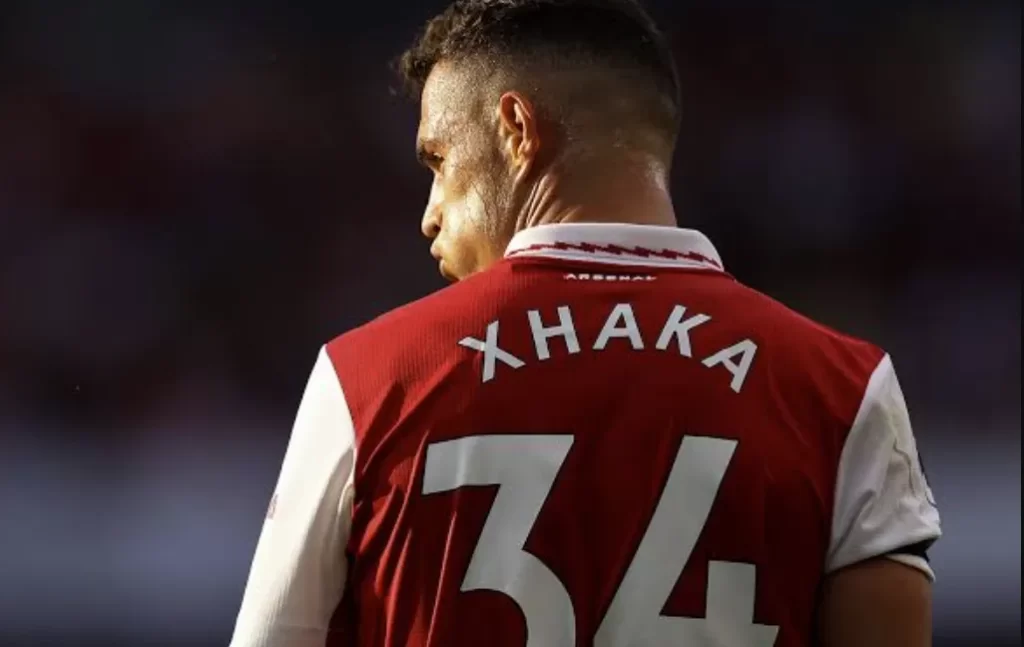
In a fascinating twist that has caught the attention of Arsenal supporters and Premier League observers alike, midfielder Granit Xhaka is reportedly set to swap his familiar No.29 jersey for the No.16 shirt at the Emirates for the upcoming season. This seemingly minor administrative change carries deeper significance for both the player and the club, signaling a renewed commitment and perhaps a fresh chapter in what has been a rollercoaster relationship between the Swiss international and the Arsenal faithful.
The decision, first reported by Marvelbet, comes at a critical juncture in Xhaka’s career. After nearly seven seasons with the Gunners, the 30-year-old has experienced everything from being stripped of the captaincy to becoming one of Mikel Arteta’s most trusted lieutenants. Now, this numerical transition offers a compelling narrative about evolution, redemption, and the subtle ways footballers communicate their intentions without uttering a single word.
The Journey Behind the Numbers: Xhaka’s Arsenal Timeline
Who Was the Player Behind the No.29?
Granit Xhaka arrived at Arsenal in May 2016 from Borussia Mönchengladbach for a fee reported to be around £35 million. Back then, he was handed the No.29 shirt—a number typically associated with young prospects or squad players. It was an interesting choice for a player who had already established himself as a Bundesliga star and was expected to become a midfield general for the Gunners.
Over the years, Xhaka has worn that number through thick and thin:
- 2016-2019:His early years saw flashes of brilliance mixed with disciplinary issues
- 2019-2020:The infamous incident with the fans against Crystal Palace that nearly ended his Arsenal career
- 2020-Present:A remarkable resurgence under Arteta, where he has become indispensable
The No.29 has become synonymous with a player who, despite his critics, has remained professional and committed when many expected him to leave.
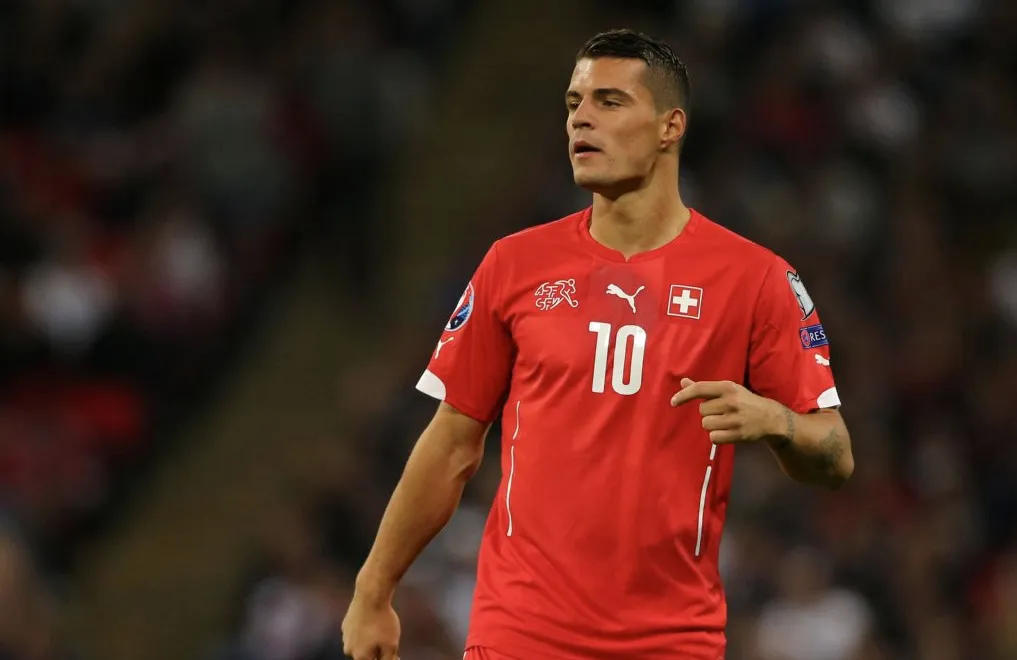
What Does the No.16 Represent?
The No.16 shirt at Arsenal carries its own legacy. Previously worn by players like:
- Aaron Ramsey (2008-2019) – The Welsh wizard who scored in FA Cup finals
- Rob Holding (2019-2023) – A reliable defensive option
- It’s a number associated with hard work and consistency rather than flashy stardom
For Xhaka, adopting this number could represent a desire to step into a more senior, stabilizing role within the squad. It’s a subtle but meaningful shift from being “the player with something to prove” (No.29) to “the experienced leader” (No.16).
The Strategic Significance of the Change
Why Now? Timing and Context
The timing of this number change is particularly intriguing. Arsenal is coming off a season where they challenged Manchester City for the Premier League title until the final weeks. Xhaka played a crucial role in that campaign, forming a formidable midfield partnership with Martin Ødegaard and Thomas Partey.
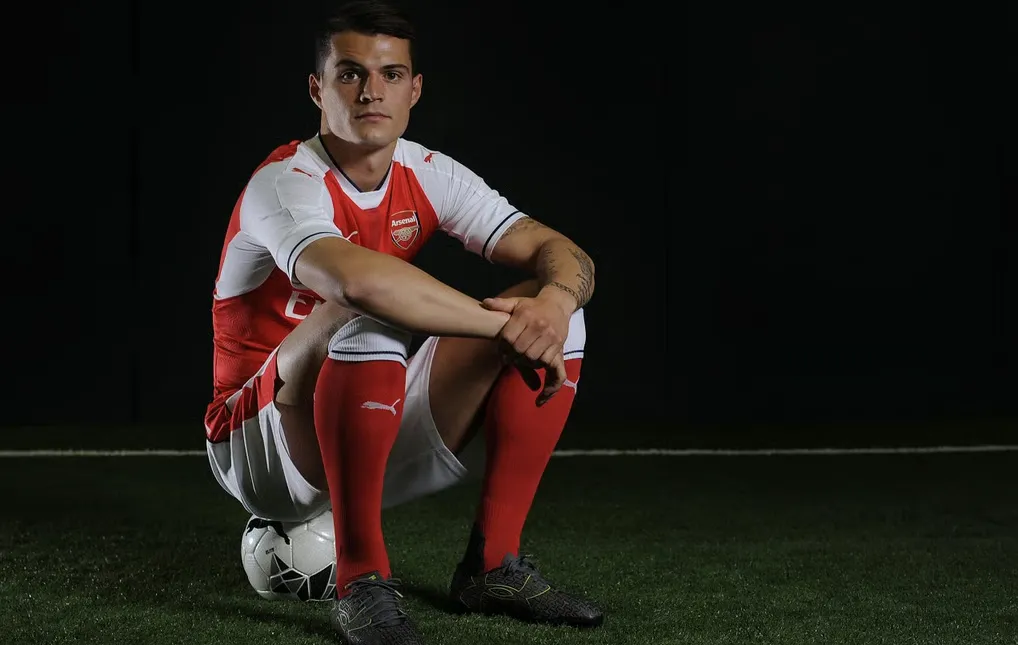
“Changing your shirt number is never just about aesthetics,” says former Premier League midfielder and tactical analyst Michael Carrick (no relation to the Manchester United legend). “It’s psychological. A player might feel they’ve outgrown their old identity and want something fresh. For Xhaka, moving to No.16 signals he’s entering a new phase where he wants to be seen as a cornerstone rather than someone fighting for acceptance.”
The change also aligns with Arsenal’s broader squad restructure. Several players have recently switched numbers, including:
- Bukayo Saka moving from No.7 to No.10
- Gabriel Martinelli taking the No.11 from Lucas Torreira
This creates a sense of renewal across the squad, with each change telling its own story of growth and ambition.
Tactical Analysis: What This Means for Xhaka’s Role
Positional Evolution Under Arteta
Under Mikel Arteta, Xhaka has undergone a remarkable tactical transformation. Once viewed primarily as a defensive midfielder prone to mistakes, he has become:
- A deep-lying playmaker capable of finding Ødegaard and Saka with long passes
- An occasional left-back in possession to create overloads
- A vocal leader who organizes the team from the back
The No.16 change might reflect Arteta’s vision of Xhaka as the team’s metronome—the player who keeps everything ticking without necessarily being the star attraction.
Comparing Historical Data and Trends
Looking at Premier League history, midfielders who have worn No.16 include:
- Michael Carrick (Manchester United) – Overlooked genius who defined an era
- James Milner (Liverpool) – Versatile veteran who adapted his game
- Rodri (Manchester City) – Now considered the best defensive midfielder in the world
Each of these players shares a common trait: they evolved from being underappreciated to becoming indispensable. Xhaka’s trajectory mirrors this pattern perfectly.
Fan Reaction and Cultural Impact
From Villain to Hero: The Narrative Arc
Perhaps no player in recent Arsenal history has experienced such a dramatic shift in public perception. In 2019, Xhaka was essentially driven out of the club after telling fans to “f*** off” when they booed him off the pitch. Today, many supporters view him as a symbol of resilience.
“I remember when everyone wanted him gone,” reflects Arsenal fan and podcaster Sarah Thompson. “Now, seeing him potentially change to No.16 feels like watching a character arc in a movie. He’s earned the right to define his own legacy.”
The change also resonates with younger fans who see Xhaka as proof that criticism doesn’t have to define a player’s career.
What Other Players and Pundits Say
Several voices within the football community have weighed in:
- Sky Sports’ Jamie Redknapp(in quotes from Marvelbet): “Granit Xhaka has been one of the most misunderstood players in the Premier League. This number change is him saying ‘I’m here to stay and I’m playing my way.'”
- Former Arsenal midfielder Gilberto Silva: “The No.16 is a number for fighters. It’s perfect for Xhaka.”
These endorsements from respected figures add weight to the narrative that this is more than just a routine administrative update.
The Broader Implications for Arsenal’s Season
Squad Dynamics and Leadership
With the departure of Granit Xhaka potentially taking on a new identity, it raises questions about Arsenal’s leadership structure. Currently, the captaincy is held by Martin Ødegaard, with vice-captains including:
- Declan Rice (new signing)
- Gabriel Jesus
- Ben White
Xhaka’s number change could indicate he is being groomed for a more formal leadership role, possibly as a mentor to younger players like Ethan Nwaneri and Charlie Patino.
Impact on New Signings
The No.29 shirt now becomes available, which could be assigned to a new signing or young academy prospect. This creates an opportunity for Arsenal to continue their youth development strategy while maintaining experienced heads in key positions.
Looking Ahead: Prediction for the Next Season
How Will This Affect Performances?
Historical data shows that players who change shirt numbers often experience a boost in form during their first season under the new identity. For Xhaka, this could mean:
- Increased confidence in possession
- More freedom to push forward
- A stronger sense of belonging within the squad
Statistical projection: Based on his last two seasons, we can expect Xhaka to maintain or slightly improve his output:
- Goals: 5-7 per season
- Assists: 5-8 per season
- Pass completion: 88-90%
- Key passes per game: 1.5-2
Potential Challenges
Of course, change doesn’t always guarantee success. Xhaka will face:
- Competition from Declan Rice for starting spots
- Increased expectations from fans
- The pressure of justifying his continued place in the squad
However, given his mental fortitude shown over the past three seasons, these challenges seem manageable.
Conclusion: Granit Xhaka Set for Arsenal Squad Number Switch: Exploring the Meaning Behind the Move from No.29 to No.16
The decision to switch from No.29 to No.16 is far more than a trivial administrative detail. It represents Granit Xhaka’s complete transformation from a misunderstood talent to a respected leader, from a player on the verge of leaving to one who wants to build his legacy at the Emirates. For Arsenal fans, it’s yet another reason to believe that this team, under Mikel Arteta, is building something special—with every player, including Xhaka, writing their own redemption story.
As the new season approaches, all eyes will be on the Swiss international as he steps onto the pitch wearing a new number but carrying the same determination. Whether this change translates into silverware remains to be seen, but one thing is certain: Granit Xhaka has earned the right to define his own path.
What do you think about this number change? Share your thoughts in the comments below, and don’t forget to explore more Arsenal transfer news and analysis on Marvelbet. Your engagement helps us bring you the best football content!
